
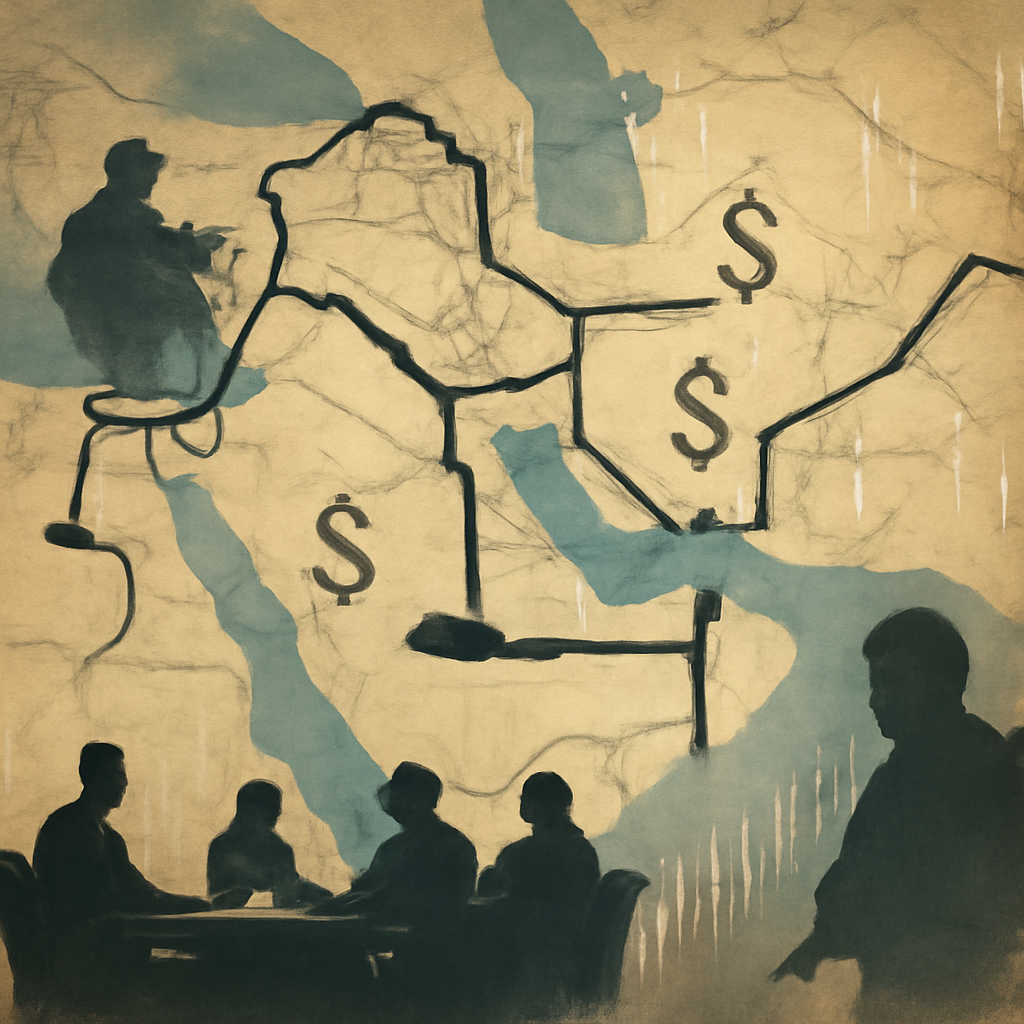
petro dollar arguments often appear whenever conflict intensifies in the Middle East, especially as oil prices jump, shipping lanes face threats, and Washington expands military deployments. The core claim is that the United States uses war, coercion, or constant instability to preserve dollar-based oil trade and maintain its wider global financial influence. This article examines that claim through recent developments, including Red Sea disruptions, the Israel-Gaza war spillover, tensions with Iran, OPEC+ production management, and the continuing importance of Gulf energy flows to world markets.
The idea has endured because the Middle East remains central to oil exports, sovereign wealth, and maritime chokepoints. The US dollar is still the dominant currency for energy contracts, international reserves, and cross-border settlement, even as some countries discuss alternatives. Critics argue this gives Washington a structural incentive to shape regional politics through bases, arms sales, sanctions, and selective intervention. Supporters of US policy reply that America acts primarily to protect allies, deter rival powers, and prevent supply shocks that would damage the global economy, not simply to defend a currency system.
petro dollar and the historical roots of US strategy
Historically, US engagement in the Middle East has combined several motives: energy security, anti-terror operations, support for Israel, containment of hostile states, and competition with major powers. After the 1970s oil shocks, stable access to Gulf oil became a core strategic concern for Washington and its partners. Over time, dollar pricing of oil reinforced US financial influence because it increased global demand for dollar liquidity, Treasury assets, and US-linked payment channels. That history helps explain why the petro dollar theory remains persuasive to many observers, even though no single war can be reduced to one motive.
Recent events have revived the discussion. Attacks on commercial shipping in the Red Sea and Gulf-linked routes pushed insurers, shipping firms, and governments to treat maritime security as an urgent issue. The US and partner navies increased patrols and strikes against armed threats to trade lanes, arguing that free navigation is essential for global commerce. For critics, these operations fit a broader pattern: military force is repeatedly justified as security policy while also protecting the infrastructure that underpins dollar-priced energy trade.
Why the petro dollar thesis gained attention again
The latest regional crises arrived during a period of wider debate over de-dollarization. Some BRICS members and sanctioned states have explored local-currency settlements, bilateral swaps, or non-dollar payment systems. Saudi Arabia and other Gulf states have also diversified diplomatic relationships, deepening ties with China while keeping security links to Washington. These shifts sparked speculation that any weakening of dollar-centered oil trade would threaten a pillar of US power. As a result, every new American deployment in the region is now interpreted by some analysts through a currency lens.
Still, the evidence is mixed. Oil can be sold in multiple currencies, but the dollar retains major advantages: deep capital markets, legal predictability, highly liquid debt instruments, and entrenched financial infrastructure. Even producers that discuss diversification often continue using dollar benchmarks because they are efficient and globally accepted. That means the United States may benefit from the existing system without necessarily launching wars to preserve it. Strategic benefit and direct causation are not the same thing, and serious analysis has to separate correlation from intent.
petro dollar versus energy security
A narrower and often stronger explanation is energy security rather than pure monetary control. Even if the United States now produces more energy than in past decades, global oil prices still affect inflation, shipping costs, financial conditions, and voter sentiment. A major disruption in the Strait of Hormuz or a prolonged regional war would hit allies in Europe and Asia, with spillover effects for the US economy. From this perspective, Washington’s military presence is designed less to force oil sales in dollars and more to prevent sudden shocks in supply, transport, and pricing.
There is also a domestic political layer. US administrations are judged on gasoline prices, inflation, and crisis management. When regional conflict threatens supply routes, Washington faces pressure from consumers, industry, and allies to act. Arms deals and security guarantees with Gulf monarchies further lock the US into the region’s balance of power. These relationships undeniably support the dollar system indirectly, but they also arise from conventional alliance politics and the desire to limit influence from Iran, Russia, and China.
How recent wars and crises fit the argument
The wars in Iraq and the broader post-2001 intervention era are often cited as proof of a petro dollar agenda. Iraq’s vast reserves and strategic location made the country central to the debate, and critics long argued that energy interests were deeply embedded in policy calculations. Yet official decision-making also included regime change logic, terrorism fears, alliance commitments, and intelligence failures. In Afghanistan, the oil-currency explanation is far weaker, which shows that a single theory cannot explain every US military action in Muslim-majority regions.
The present landscape is even more complex. The Israel-Gaza war has raised the risk of a wider regional confrontation involving Hezbollah, Iran-backed groups, and maritime attacks. The US response has included carrier deployments, missile defense support, and strikes presented as deterrence. These moves can be read as protecting a regional order favorable to Washington, including energy transit and investor confidence. But they also reflect alliance obligations and an effort to prevent escalation into a broader interstate war that could destabilize several governments at once.
Financial power, sanctions, and the dollar system
If the petro dollar theory is overstated in explaining war, it is stronger when discussing sanctions and financial power. The United States can restrict access to dollar clearing, banking networks, and key technologies, making economic coercion one of its most powerful foreign policy tools. Iran is the clearest example: sanctions on oil exports, banking access, and shipping have sought to shape regional behavior without full-scale war. This shows how military force and financial dominance can work together, even if preserving dollar invoicing is only one part of a wider strategic toolkit.
Another key factor is China. Beijing is the largest energy importer and has steadily expanded its commercial and diplomatic reach across the Middle East. It has promoted yuan settlement in some transactions, brokered talks between regional rivals, and invested in logistics and infrastructure. For US planners, this is not only about oil but about standards, influence, technology, ports, and long-term alignment. In that context, maintaining a strong presence in the Middle East serves broader great-power competition, with the dollar system functioning as one advantage among several rather than the sole objective.
Limits of the petro dollar explanation
The strongest criticism of the war-for-petro-dollar thesis is that it can become too totalizing. It may underplay local agency, sectarian divides, regime survival strategies, and the internal politics of states such as Saudi Arabia, Iran, Israel, Iraq, and the UAE. It can also ignore how non-state actors, militia networks, and ideological conflicts shape events independently of oil pricing. Middle East wars do not occur in a vacuum created by Washington alone; they emerge from layered regional contests in which US policy is influential but not all-powerful.
A balanced conclusion is that the United States has long pursued a regional order that protects energy flows, supports partners, and preserves the advantages of a dollar-centered global economy. That does not prove every war was launched to defend the petro dollar, but it does show that oil, finance, and force are intertwined. The latest news cycle, from Red Sea insecurity to Gulf diplomacy and sanctions pressure, keeps this debate alive because the strategic incentives are real. The most credible analysis therefore rejects simplistic slogans while recognizing that military power and monetary power often reinforce each other in the Middle East.
What to watch next
Going forward, the key indicators are clear: whether major Gulf producers expand non-dollar energy settlement; whether Red Sea and Hormuz security deteriorate; whether US-Iran tensions intensify; and whether China converts economic influence into durable security leverage. Also important are oil price volatility, OPEC+ output choices, and election-year pressure inside the United States. Together, these factors will shape whether the petro dollar debate remains a fringe slogan or becomes a more central framework for interpreting US strategy in the Middle East over the next several years.
Leave a Reply