
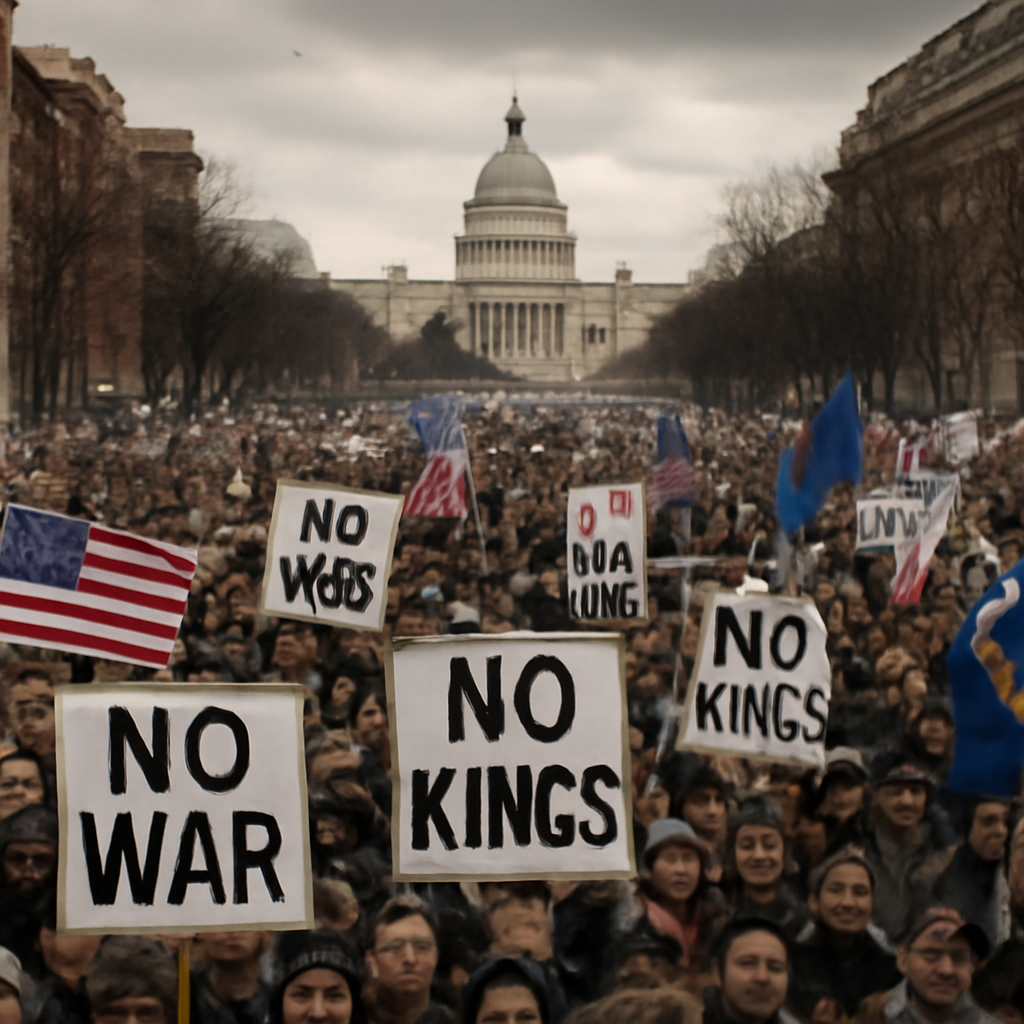
trump protests are again dominating headlines as large crowds in the United States and across Europe mobilize against the threat of a wider Iran war and against what demonstrators describe as increasingly authoritarian, strongman-style politics. In recent days, organizers have linked anti-war anger with the language of the growing ‘No Kings’ message, arguing that foreign policy escalation and domestic executive power are now part of the same political story. From Washington to London, Berlin, Paris, and other major cities, the demonstrations have blended anti-intervention demands with calls to defend democratic limits on power.
The latest wave of marches reflects a deep public fear that any rapid military confrontation involving Iran could trigger a broader regional crisis, spike energy prices, destabilize global markets, and draw the US and its allies into a prolonged conflict. Protesters say the lesson from past interventions in the Middle East is clear: once political leaders begin framing war as inevitable, dissent is often marginalized until the costs become impossible to ignore. That anxiety has helped transform scattered rallies into a visibly transatlantic movement.
Why trump protests are expanding
At the center of the demonstrations is a simple argument: voters are weary of brinkmanship abroad and centralized power at home. Activist coalitions, labor groups, student networks, veterans, and civil liberties advocates have increasingly worked together, saying that the same political culture that rewards nationalist posturing can also weaken institutional checks and public accountability. The ‘No Kings’ slogan has become shorthand for opposition to personalized rule, political intimidation, and the idea that one leader’s instincts should outweigh constitutional process.
In the US, major protest scenes have formed around state capitols, downtown federal buildings, university campuses, and symbolic spaces near the White House. Organizers have used speeches, teach-ins, and coordinated social media campaigns to frame their message in practical terms: Congress must reassert war powers, military action should not be normalized through rhetoric, and democratic institutions must not bend to personality-driven politics. Even among people with different views on party strategy, there is broad agreement that public pressure is needed before events outpace debate.
trump protests and the ‘No Kings’ message
The ‘No Kings’ theme has grown because it connects emotionally and historically. Protest signs and chants invoke the American rejection of monarchy while warning against a modern political culture that glorifies domination, loyalty tests, and executive absolutism. Demonstrators argue that anti-war politics cannot be separated from this critique. In their view, a leader who treats constraints as weakness may also be more willing to test military options without sufficient scrutiny, especially when crisis language can consolidate support or shift attention from domestic controversy.
That framing has resonated beyond the US. In several European cities, speakers have tied solidarity with American demonstrators to Europe’s own concerns about democratic backsliding, militarization, and far-right political narratives. While the scale and tone vary by country, the common message is that democracies are healthiest when citizens question war logic early, not after troops are deployed or diplomatic options have collapsed. This has given the protests a broader civic identity rather than a narrow partisan one.
trump protests in Europe: why the response matters
European turnout matters both politically and symbolically. Many governments on the continent remain tightly connected to US security decisions, and any serious confrontation with Iran would have immediate consequences for NATO cohesion, refugee pressures, shipping routes, inflation, and domestic security debates. Protesters in Europe are therefore not merely commenting on American politics from a distance; they are responding to a conflict risk that could quickly affect their own societies. The result has been a visible revival of cross-border anti-war organizing.
In capitals such as London and Berlin, participants have emphasized diplomacy, de-escalation, and international law. In Paris, Madrid, Brussels, and Rome, campaigners have similarly focused on preventing an avoidable spiral driven by retaliation, electoral messaging, or strategic miscalculation. Analysts note that these rallies are also a reminder that public opinion in allied democracies can constrain leaders, especially when governments appear too aligned with escalation without making a clear legal or strategic case to their citizens.
Iran war fears drive a broader anti-power backlash
What makes this moment distinct is the fusion of foreign policy alarm with domestic democratic concern. Previous anti-war protests often concentrated on military facts alone, but today’s crowds are equally focused on process: who decides, under what authority, and with what transparency. Demonstrators repeatedly argue that the danger of an Iran conflict cannot be understood apart from the political incentives surrounding it. They fear that a crisis atmosphere can reward blunt rhetoric, sideline institutions, and recast dissent as disloyalty.
This concern has been amplified by years of polarization and by public exhaustion with emergency-style politics. For many protesters, the phrase ‘under siege’ applies not only to one embattled political figure but to democratic norms themselves. They see a pattern in which institutions are tested through confrontation, legal boundaries become politicized, and public fear is converted into a governing method. That is why anti-war banners have appeared next to signs defending courts, elections, civil liberties, and legislative oversight.
What organizers want next
Organizers are pushing for a mix of immediate and longer-term goals. In the short term, they want explicit commitments against unauthorized military escalation, a renewed push for diplomacy with regional partners, and open debate in legislatures rather than decisions made through opaque executive channels. In the medium term, they want stronger protections against overreach, including reaffirmed war powers, better transparency on intelligence claims, and a political culture less prone to leader-centric crisis management.
- Public commitments against unauthorized war escalation with Iran
- Congressional and parliamentary oversight of military decisions
- Expanded diplomatic engagement and de-escalation efforts
- Protection of civil liberties during periods of political tension
- Clear resistance to personality-driven or ‘No Kings’ politics
What the protests could mean for US politics
The practical impact of these demonstrations will depend on whether they remain episodic or evolve into sustained civic pressure. Large street mobilizations can shift media framing, harden opposition among undecided voters, and force lawmakers to state clear positions. They can also create alliances that last beyond a single crisis. If anti-war activists, democracy reform groups, unions, students, and centrist institutionalists continue to cooperate, the movement could influence not just debate over Iran but the broader conversation about presidential power and democratic accountability in the election cycle ahead.
There are limits, of course. Protest energy does not automatically convert into policy change, especially when governments invoke security risks. Yet even critics of the rallies concede that the demonstrations reveal a real and widening public unease. Millions of people do not turn out across multiple countries without a deeper sense that political guardrails are under pressure. The size of the crowds suggests that fear of another Middle East conflict is now intertwined with fear of executive excess.
trump protests and the road ahead
For now, the central message from the streets is unmistakable: many citizens in the US and Europe do not want a war with Iran, and they do not want a political culture that treats concentrated power as a virtue. The protests have become a referendum on two linked questions of democratic life—how nations choose peace or conflict, and how far voters are willing to tolerate personalized rule wrapped in populist spectacle. Whether leaders adjust course remains uncertain, but the mobilization itself has already changed the public conversation.
As the situation develops, the significance of these rallies will lie not only in crowd size but in narrative power. By tying anti-war demands to the language of constitutional restraint and ‘No Kings’ politics, demonstrators have built a frame that is easy to grasp and difficult to dismiss. Their warning is that war abroad and overreach at home often reinforce each other. Their demand is equally clear: no unchecked power, no manufactured inevitability, and no march toward conflict without the full scrutiny of democratic societies.
Leave a Reply