
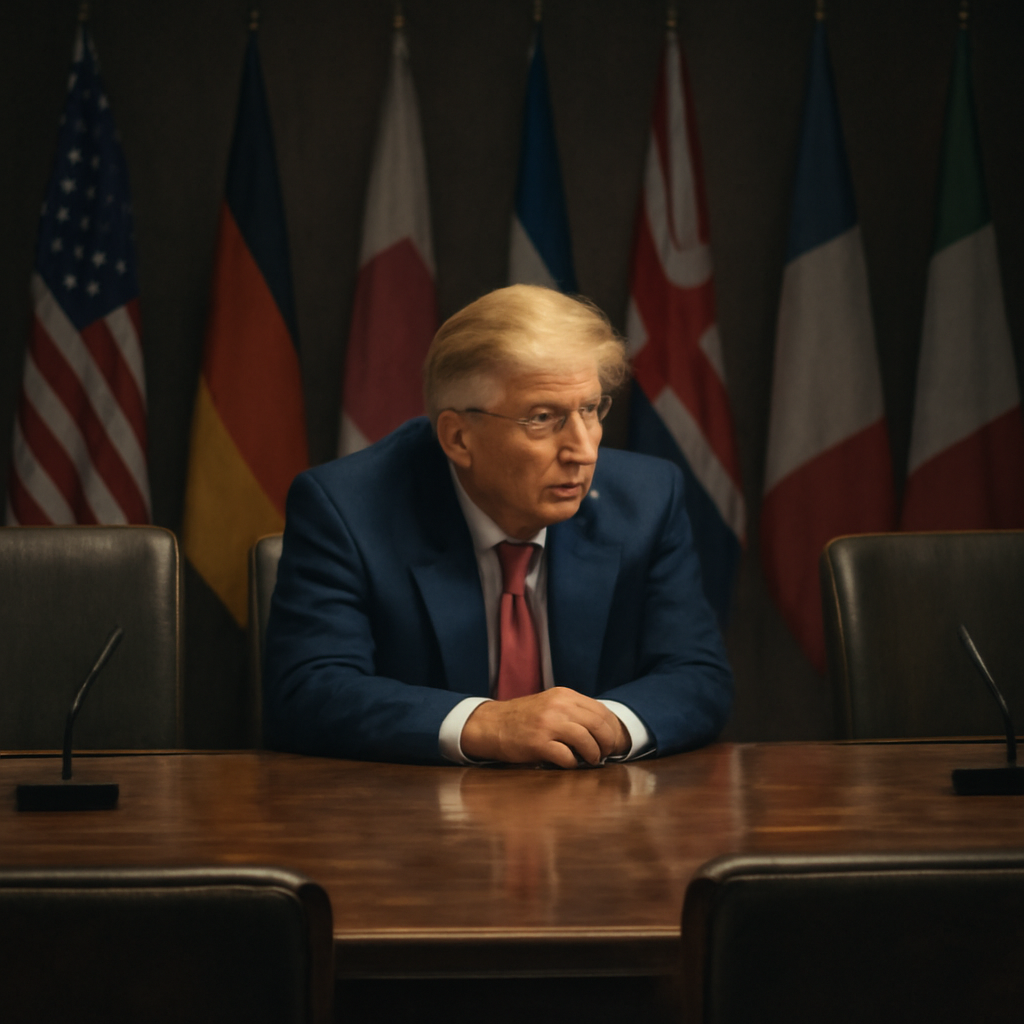
trump diplomacy failure is a phrase that keeps returning to political debate because Donald Trump’s approach to foreign policy has often prioritized spectacle over strategy. His defenders call him disruptive, but critics argue that disruption without trust, consistency, or coalition-building is not diplomacy at all. As the 2024 election aftermath and 2025 policy debates keep his international record in the news, the central question remains whether Trump made America stronger abroad or simply louder. The evidence from alliances, trade conflicts, adversary relations, and crisis management suggests a pattern of instability rather than durable diplomatic success.
How trump diplomacy failure damaged US credibility
Diplomacy depends on reliability. Allies need to believe that American commitments will survive domestic politics, while rivals need to understand that US red lines are serious and coherent. Trump repeatedly weakened that foundation by changing positions suddenly, praising strongmen while criticizing democratic partners, and treating long-term alliances like transactional business deals. That style may create headlines, but it creates confusion in capitals that depend on clear signaling from Washington. When a president insults treaty allies and then asks them for cooperation, the result is less leverage, not more.
One of the clearest examples was his handling of NATO. Trump was right that some European members had long underspent on defense, but his method often alienated the very governments he wanted to pressure. Publicly questioning alliance commitments, casting doubt on mutual defense, and framing security guarantees as if they were subscription payments sent a dangerous message to both allies and adversaries. Russia did not need America to leave NATO formally; it only needed doubts about whether the US president truly believed in it. Effective diplomacy reforms institutions while preserving confidence in them. Trump’s approach strained the institution first and hoped results would follow later.
trump diplomacy failure and the politics of strongman praise
Another reason many analysts view Trump as a diplomatic failure is his repeated admiration for authoritarian leaders. From Vladimir Putin to Kim Jong Un, Trump often spoke about personal chemistry as though diplomacy were mainly a matter of individual flattery. Personal rapport can matter, but it cannot replace policy discipline. In practice, his praise rarely produced meaningful concessions. North Korea did not abandon its nuclear program after the summits. Russia was not strategically contained by compliments. Instead, these interactions often gave propaganda victories to adversaries while producing few measurable gains for US interests.
Summits without lasting results
The meetings with Kim Jong Un remain a textbook case. Trump turned high-level engagement into political theater, creating dramatic images that were marketed as breakthroughs. Yet the core objective of denuclearization was not achieved, verification mechanisms did not materialize, and North Korea continued advancing its capabilities. Diplomatic symbolism has value only when backed by enforceable agreements. Without that substance, the summit process looked less like a strategic success and more like a media event that temporarily softened scrutiny without solving the underlying threat.
His relationship with Putin raises even deeper concerns. Even before Russia’s full-scale invasion of Ukraine reshaped European security, critics argued that Trump consistently sent mixed signals about Moscow. He sometimes approved tough measures through his administration, but his own rhetoric often undercut deterrence by sounding deferential. In 2025, as debates continue over Ukraine aid, NATO burden-sharing, and a possible second Trump-era foreign policy, those old concerns have become newly relevant. If allies believe Washington may reward coercion with ambiguity, they prepare for instability, not peace.
Trade wars are not a substitute for diplomacy
Trump also framed tariffs as a universal foreign policy tool. While economic pressure can be useful, his trade wars often blurred the line between negotiation and self-inflicted disruption. The standoff with China reflected legitimate concerns over intellectual property, industrial policy, and market access, but the strategy frequently appeared reactive and politically driven rather than integrated into a wider diplomatic framework. Farmers, manufacturers, and consumers absorbed costs while partners struggled to understand the long-term US objective. Diplomacy works best when trade, security, and alliance management reinforce one another. Under Trump, these tracks often collided.
The same pattern appeared with traditional allies. Threatening tariffs on friendly countries while demanding strategic solidarity made the United States look erratic. A government can drive hard bargains, but if every relationship becomes a zero-sum test of dominance, even partners begin hedging against you. That is the opposite of successful statecraft. It narrows options in future crises because countries become less willing to take political risks on America’s behalf. In global politics, trust is not sentimental; it is a practical asset. Trump spent that asset freely and replenished it poorly.
Crisis messaging and diplomatic inconsistency
Words matter in international affairs because they move markets, military calculations, and public opinion. Trump’s communication style often produced short-term domestic attention but long-term international uncertainty. Sudden social media announcements about troop withdrawals, threats, sanctions, or peace claims could bypass normal policy planning and leave even US officials scrambling. That inconsistency made it harder for diplomats to negotiate seriously because foreign governments were never sure whether they were hearing settled policy or improvisation. Diplomatic influence depends not only on power, but on disciplined messaging that others can trust.
The Afghanistan record also fits this criticism. Trump campaigned on ending endless wars, a goal with broad support, but the negotiation process with the Taliban was widely criticized for sidelining the Afghan government and focusing on withdrawal optics over durable political settlement. The later collapse under President Biden had multiple causes, yet Trump’s deal shaped the battlefield and timeline in ways many experts considered deeply flawed. A diplomatic success would have strengthened the conditions for stability. Instead, the process was remembered by critics as another example of headline-driven bargaining detached from long-term consequences.
Recent 2025 debates keep the diplomatic record alive
Current debate in 2025 keeps returning to Trump’s foreign policy because his campaign-era promises and post-election commentary continue to frame world crises in personal terms. He still claims he could end wars quickly through toughness and dealmaking, especially regarding Ukraine and the Middle East, but critics note that he rarely explains the enforceable mechanisms behind those promises. In a world shaped by Russian aggression, China’s strategic ambitions, Middle East volatility, and nervous allies, diplomacy cannot rest on charisma alone. It requires patient coalition management, credible commitments, and careful sequencing. Those are precisely the areas where Trump’s record appears weakest.
Supporters often point to the Abraham Accords as evidence against the charge of failure, and they do deserve recognition as a notable achievement in Arab-Israeli normalization. But one success does not erase broader patterns of diplomatic weakness. The accords did not resolve the Palestinian issue, did not transform Iran policy into a stable regional order, and did not compensate for wider alliance strains and erratic crisis management. Measured fairly, Trump’s record is mixed at best, not the comprehensive diplomatic triumph his allies claim. Critics focus on the larger pattern because diplomacy is judged by systems of stability, not isolated wins.
Why trump diplomacy failure matters beyond party politics
The reason this issue matters is bigger than one politician. The American president shapes the expectations of allies, rivals, investors, and militaries across the world. A diplomatic style built on public humiliation, abrupt reversals, and personal praise for autocrats can weaken institutions that take decades to build. It can also encourage adversaries to test boundaries, believing the United States may substitute rhetoric for strategy. Whether one admires Trump’s willingness to challenge convention or not, the outcomes matter most. Too often, the outcomes were confusion, fractured trust, and unresolved crises.
That is why many observers conclude that Donald Trump is a failure in diplomacy. He understood how to dominate a news cycle, but diplomacy is not measured in viral moments. It is measured in stronger alliances, reduced risks, credible deterrence, workable agreements, and long-term gains for national interest. On those tests, his record remains deeply vulnerable to criticism. As 2025 politics revives arguments over America’s role in the world, the debate is no longer just about style. It is about whether a nation can lead effectively while treating diplomacy as performance. Trump’s record suggests the answer is no.
Leave a Reply