
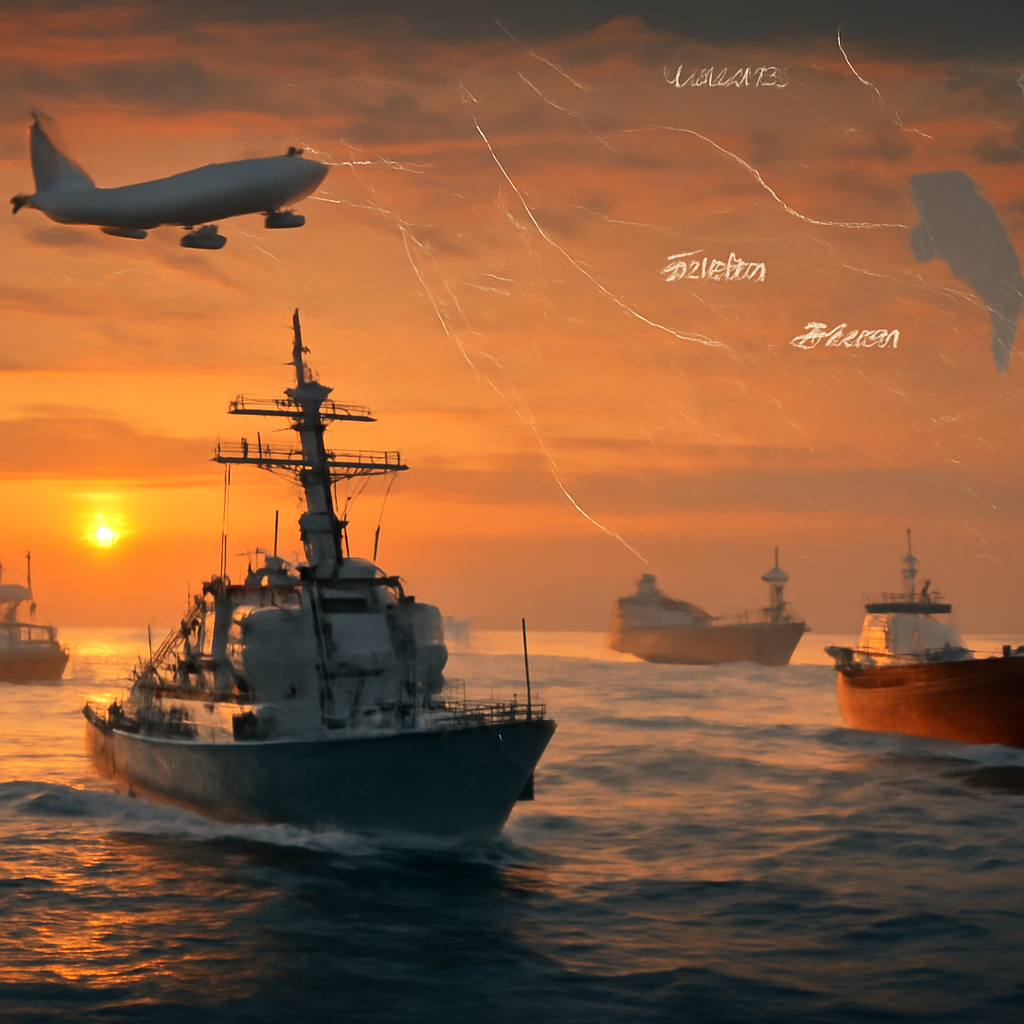
strait of hormuz security has returned to the center of US strategic planning as Washington responds to rising regional tension, repeated threats to commercial shipping, and the wider risk of disruption across Middle East sea lanes. The latest US approach is not built around one dramatic new operation, but around a layered plan that combines visible naval presence, intelligence sharing, air and missile defense, close work with Gulf partners, and faster response options if tankers or warships are challenged.
The renewed focus comes at a time when global shipping routes are already under pressure from conflict spillover in nearby waters, especially the Red Sea and Gulf of Aden. US officials view the narrow waterway between Iran and Oman as too important to leave vulnerable, because a major share of the world’s seaborne oil and liquefied natural gas moves through it. Any serious disruption there could quickly raise insurance costs, shake energy markets, and force rerouting decisions for commercial fleets.
Why the strait of hormuz matters to US strategy
The Strait of Hormuz is one of the world’s most important maritime chokepoints. At its narrowest practical transit lanes, ships pass through a tightly managed corridor, making tankers and cargo vessels easier to monitor but also more exposed to harassment, drone surveillance, fast-boat pressure, mining threats, or missile attack. For the United States, keeping this corridor open is not only about Gulf partners; it is about defending freedom of navigation and reducing the chance that regional conflict spills into a global economic shock.
That is why recent US planning has emphasized deterrence over escalation. The message from Washington has been that commercial shipping must continue moving, while any attempt to intimidate or seize vessels should meet a rapid and coordinated response. This posture fits a broader pattern seen across the region: use military presence to lower risk, reassure allies, and signal that the US is watching key waterways continuously rather than reacting only after a crisis erupts.
Latest strait of hormuz plans: stronger naval posture
The most visible element of the latest plans is a reinforced naval posture led by the US Fifth Fleet and supported by carrier strike group assets, destroyers, maritime patrol aircraft, and logistics vessels when needed. Rather than announcing a permanent surge every time tensions rise, the US has increasingly favored flexible deployments that can be expanded quickly. This allows Washington to shift warships into the Gulf, escort vulnerable vessels if conditions worsen, and maintain persistent surveillance without locking itself into a single public timetable.
Another part of the plan is the use of embarked security teams and closer monitoring of commercial traffic. In previous periods of heightened tension, the US considered or employed armed personnel on certain vessels linked to US interests to complicate seizure attempts. While not every tanker will receive direct escort, the broader concept is to make commercial traffic less isolated through nearby naval coverage, coordinated reporting procedures, and rapid support from aircraft or patrol ships if suspicious activity develops.
strait of hormuz surveillance and early warning
Surveillance is now one of the most important pillars of US policy. The Pentagon has expanded reliance on drones, patrol aircraft, shipborne sensors, and intelligence feeds from regional bases to build a more complete picture of maritime traffic and potential threats. Early warning matters because many incidents in the Gulf unfold quickly, with fast attack craft, helicopters, or drones approaching vessels in minutes. By improving sensor coverage and data-sharing, the US aims to identify abnormal movement sooner and cut decision time during a crisis.
This also connects to the wider American push for integrated air and missile defense in the Gulf. If conflict were to widen, the threat would not come only from small boats. Anti-ship missiles, armed drones, and coastal launch systems could threaten both naval units and merchant shipping. US planners therefore see protection of the Strait of Hormuz as part of a networked defense architecture linking radars, interceptors, aircraft, and command systems across allied states in the region.
Allied coordination and burden sharing
Washington’s latest plans depend heavily on partners. The US has worked with Gulf states, European navies, and multinational maritime coalitions to improve patrol coverage, information exchange, and legal coordination around shipping incidents. This matters because a multinational framework gives commercial operators more confidence and reduces the appearance that security in the waterway rests on a unilateral US-Iran standoff. It also helps spread the military burden at a time when US forces are managing multiple theaters at once.
Regional cooperation is especially important for port access, refueling, surveillance basing, and diplomatic messaging. Gulf states have a direct interest in keeping exports flowing, but they also want to avoid being dragged into unnecessary escalation. The latest US plan tries to balance both concerns: provide enough deterrence to protect shipping, while preserving room for de-escalation through backchannel diplomacy and public signaling that the mission is defensive, not a prelude to a broader war.
Commercial shipping guidance and response plans
Beyond military assets, the US is refining how it communicates with shipping companies. That includes navigational advisories, threat bulletins, reporting channels, and recommendations on transit timing, convoy coordination, and onboard security procedures. These practical steps may seem less dramatic than warship movements, but they are critical because merchant crews are often the first to spot suspicious patterns. The more standardized the reporting chain, the easier it becomes for naval forces to distinguish between routine congestion and a developing threat.
Shipping security planners are also watching how attacks and interdictions elsewhere in the region change risk calculations in the Gulf. If insurers judge that threats are converging across multiple Middle East routes, pressure will rise on governments to provide more direct escorts and faster crisis management. That is why the US wants a credible menu of options ranging from remote monitoring to close naval accompaniment, depending on how severe the threat picture becomes on any given week.
What could change next
The next phase of US planning will likely depend on Iranian behavior, regional proxy activity, and the durability of current deterrence. If harassment increases, Washington could put more warships near the chokepoint, expand joint patrols with partners, and publicly identify hostile actions more quickly. If the situation stays tense but below the threshold of open confrontation, the US may continue with a quieter model centered on intelligence, rapid reaction forces, and selective escorts for higher-risk vessels.
There is also a domestic and global political dimension. US leaders know that any sustained disruption in the Strait of Hormuz would affect fuel prices, inflation expectations, and broader market confidence. That makes maritime security there not only a defense issue but also an economic one. For this reason, the latest US plans aim to reassure markets as much as militaries: keep the corridor open, show readiness without overcommitting, and make clear that any attempt to choke off shipping will face a coordinated response.
Outlook for the strait of hormuz
The most realistic reading of current policy is that the United States is building resilience rather than promising total control. The Strait of Hormuz will remain vulnerable because geography, regional rivalry, and military proximity make it inherently tense. But the latest US plans show a clear direction: more surveillance, smarter naval positioning, closer allied coordination, stronger defenses against drones and missiles, and better support for merchant shipping. Together, these measures are designed to reduce the chance that a local maritime incident turns into a wider energy and security crisis.
For now, the US objective is straightforward: keep trade moving, deter seizure or sabotage attempts, and preserve room for diplomacy even while military readiness stays high. That balancing act will define American policy in the months ahead. If it works, the world may hear less about dramatic naval confrontations in the Strait of Hormuz. If it fails, this narrow stretch of water could once again become the focal point of a much larger international crisis.
Leave a Reply