
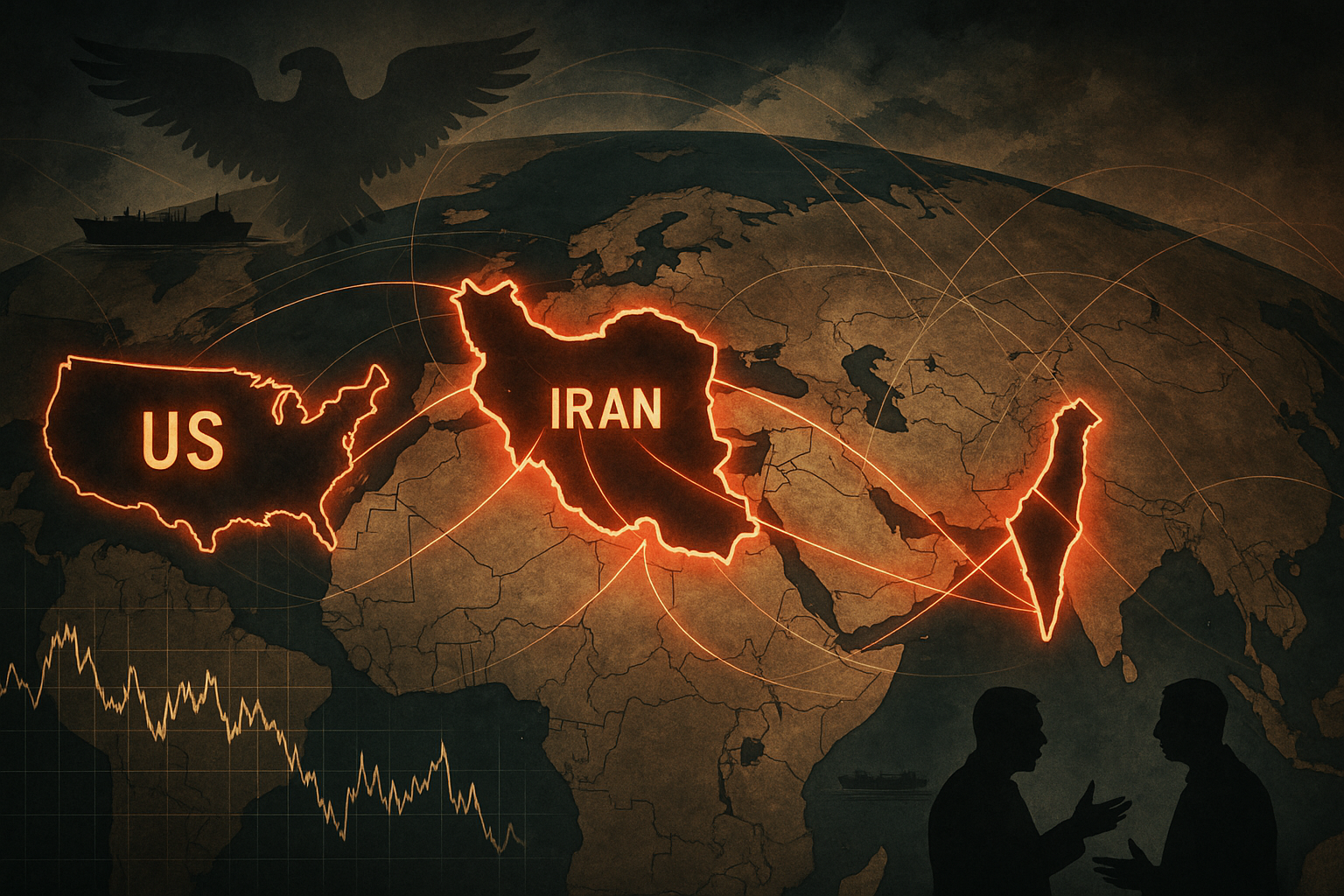
american dominance is the real issue beneath the headlines about a possible Iran-US-Israel war. While wars are often judged by missiles fired, cities damaged, and leaders threatened, their deeper importance lies in what they reveal about the balance of power. If such a conflict were to widen, it could become more than a regional crisis. It might expose the limits of Washington’s military reach, strain its economy, divide its allies, and signal that the United States can no longer shape outcomes across multiple theaters with the confidence it once had.
For decades, American global dominance rested on several pillars: unmatched military power, control of financial institutions, influence over energy routes, a vast alliance system, and the ability to set the terms of diplomacy. The United States did not need to win every war decisively to remain dominant. It only needed to convince rivals and partners that no other power could replace it. A major conflict involving Iran and Israel, with direct US military participation, would test all of those pillars at once in a way few recent crises have.
Why american dominance is being tested now
The timing matters. The United States is already managing strategic competition with China, a costly commitment to European security after Russia’s invasion of Ukraine, domestic political polarization, and rising skepticism among voters about endless foreign entanglements. In that environment, a large Middle East war would not unfold in isolation. It would compete for weapons, funding, diplomatic attention, and public support. Rivals would watch closely for signs of overstretch, while partners would ask whether US guarantees still carry the same weight they once did.
Iran presents a particularly difficult challenge because it does not need to defeat the United States in a conventional war to damage US prestige. It can use missiles, drones, proxy networks, cyber operations, maritime disruption, and political pressure across multiple fronts. Even limited success in raising costs, disrupting oil flows, or surviving a prolonged campaign could allow Tehran to claim strategic victory. In great power politics, perception often matters as much as battlefield outcomes, and perception is where dominant powers are most vulnerable when wars drag on.
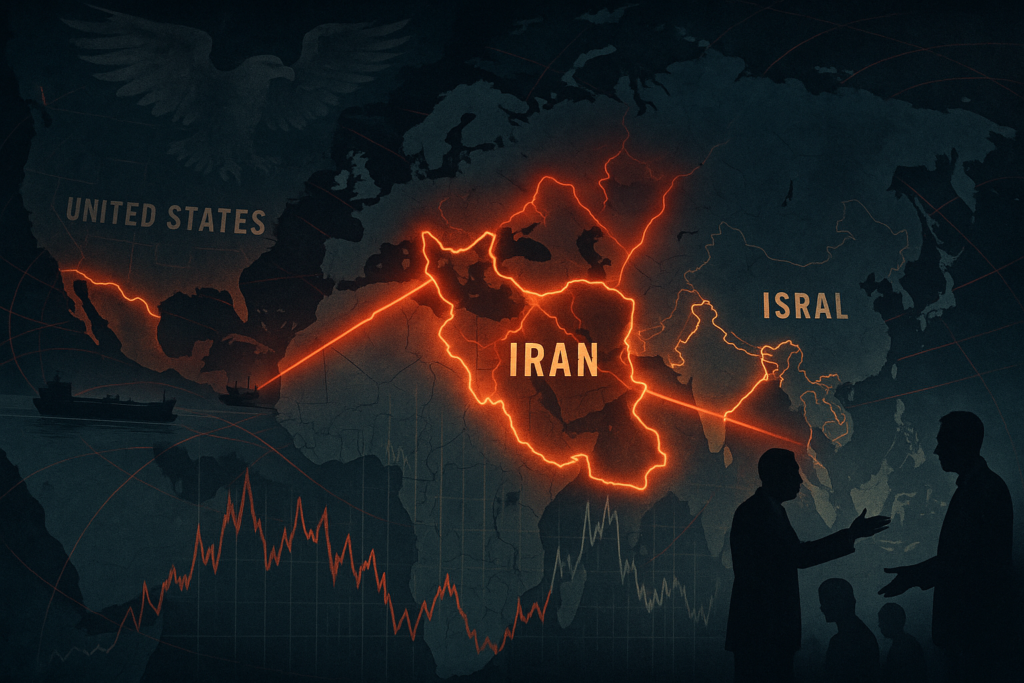
american dominance and the limits of military superiority
American military strength remains enormous, but dominance is not the same as invincibility. The US can project force globally, yet recent history has shown that superior firepower does not always produce durable political outcomes. Iraq and Afghanistan demonstrated how quickly battlefield success can become strategic frustration. In a conflict tied to Iran and Israel, Washington could destroy targets and still face a wider regional firestorm, attacks on bases, pressure on shipping lanes, and a surge of anti-American sentiment that outlasts the military campaign itself.
Another problem is escalation control. Israel may seek decisive action against Iranian capabilities, while the United States could prefer containment. Those goals may overlap at first but diverge under pressure. If Washington is pulled into deeper involvement by alliance commitments or retaliatory cycles, it may find itself reacting rather than leading. A superpower appears less dominant when it is seen as unable to set clear limits for allies, enemies, or even for the conflict’s duration and scope.
Economic pressure could erode power faster than battlefield losses
The economic consequences of a major regional war could be severe. The Middle East remains central to energy markets, shipping routes, insurance pricing, and investor confidence. If the Strait of Hormuz were threatened or regional infrastructure came under attack, oil prices could jump sharply. That would feed inflation, unsettle financial markets, and force difficult choices for Western governments already dealing with debt, slower growth, and social discontent. A hegemon weakened by economic shocks often loses influence gradually but decisively.
Sanctions are another area where US power may look less absolute than before. Washington still wields enormous financial leverage, yet many states are increasingly looking for ways to reduce their exposure to the dollar system. China, Russia, Gulf states, and parts of the Global South have all explored alternatives, whether for trade settlement, reserve diversification, or strategic autonomy. A wider war could accelerate that trend if countries conclude that dependence on US-led systems brings too much geopolitical risk.
Alliances, legitimacy, and the political cost of leadership
American dominance has always depended on more than carriers and currencies. It has also required legitimacy, or at least enough international acceptance to sustain coalitions. A war tied closely to Israel’s security would be politically explosive across the Middle East, parts of Europe, and much of the Global South. Even governments that quietly cooperate with Washington might face public anger if civilian casualties rise or if the war is seen as avoidable. Diplomatic distance from the US could widen, even among formal partners.
This matters because hegemony weakens when allies begin hedging. European states may remain aligned with Washington but still resist escalation if it hurts their economies or domestic politics. Gulf monarchies may cooperate on security while deepening ties with China. Asian allies may wonder whether US attention can remain focused on the Indo-Pacific if another long war drains resources. Dominance does not end only when an empire is defeated; it can fade when allies stop believing it can manage several crises at once.
How China and Russia could benefit
Neither Beijing nor Moscow would need to intervene directly to gain from a US entanglement. China could present itself as a steadier commercial partner, deepen energy ties, and portray the United States as a destabilizing force. Russia could exploit higher energy prices, spread disinformation, and celebrate another example of Western inconsistency. Both powers would use the conflict to argue that the US-led order brings war rather than stability. That narrative would resonate in countries already skeptical of American intentions.
At the same time, a prolonged war could shift military inventories and industrial capacity away from other theaters. Precision munitions, air defense systems, naval assets, and intelligence resources are finite. If Washington must devote more of them to the Middle East, deterrence elsewhere could be affected. That would be especially significant in Asia, where credibility against China depends not just on declarations but on visible readiness and sustainable capacity.
Could this be the beginning of the end?
The phrase should be used carefully. American power is still immense, and history rarely turns on one war alone. The United States has survived costly conflicts before and retained central influence in world affairs. Yet dominant eras usually end through accumulation, not sudden collapse. A major Iran-US-Israel war could become one more accelerant in a longer transition already underway: from a US-led order toward a more contested, transactional, and multipolar system. In that sense, the danger is not immediate replacement but gradual erosion.
If Washington emerges from such a conflict with damaged credibility, higher economic strain, divided allies, and reduced strategic flexibility, the symbolic impact would be significant. Rivals would grow bolder, partners more cautious, and neutral states more willing to diversify away from US-led institutions. That would not mean the end of American power, but it could mark the end of the assumption that American power is decisive everywhere. For a hegemon, losing that assumption may be the most important loss of all.
What would determine the future of american dominance?
Much would depend on whether the United States could define limited objectives, avoid open-ended escalation, preserve allied unity, and manage the economic fallout. Strategic discipline matters as much as military strength. If Washington can prevent a regional war from becoming a global credibility crisis, its leadership could endure despite the shock. If it cannot, the conflict may be remembered not simply as another Middle East war, but as a moment when the world saw the boundaries of US power more clearly than before.
The larger lesson is that global dominance is never permanent. It survives only as long as military capacity, economic resilience, political legitimacy, and alliance trust reinforce one another. A war involving Iran, the United States, and Israel would pressure all four at once. That is why analysts are asking a question that once seemed unthinkable. The true significance of such a conflict would not lie only in who strikes first or who claims victory, but in whether it reveals that the era of uncontested American leadership has entered irreversible decline.
Leave a Reply