
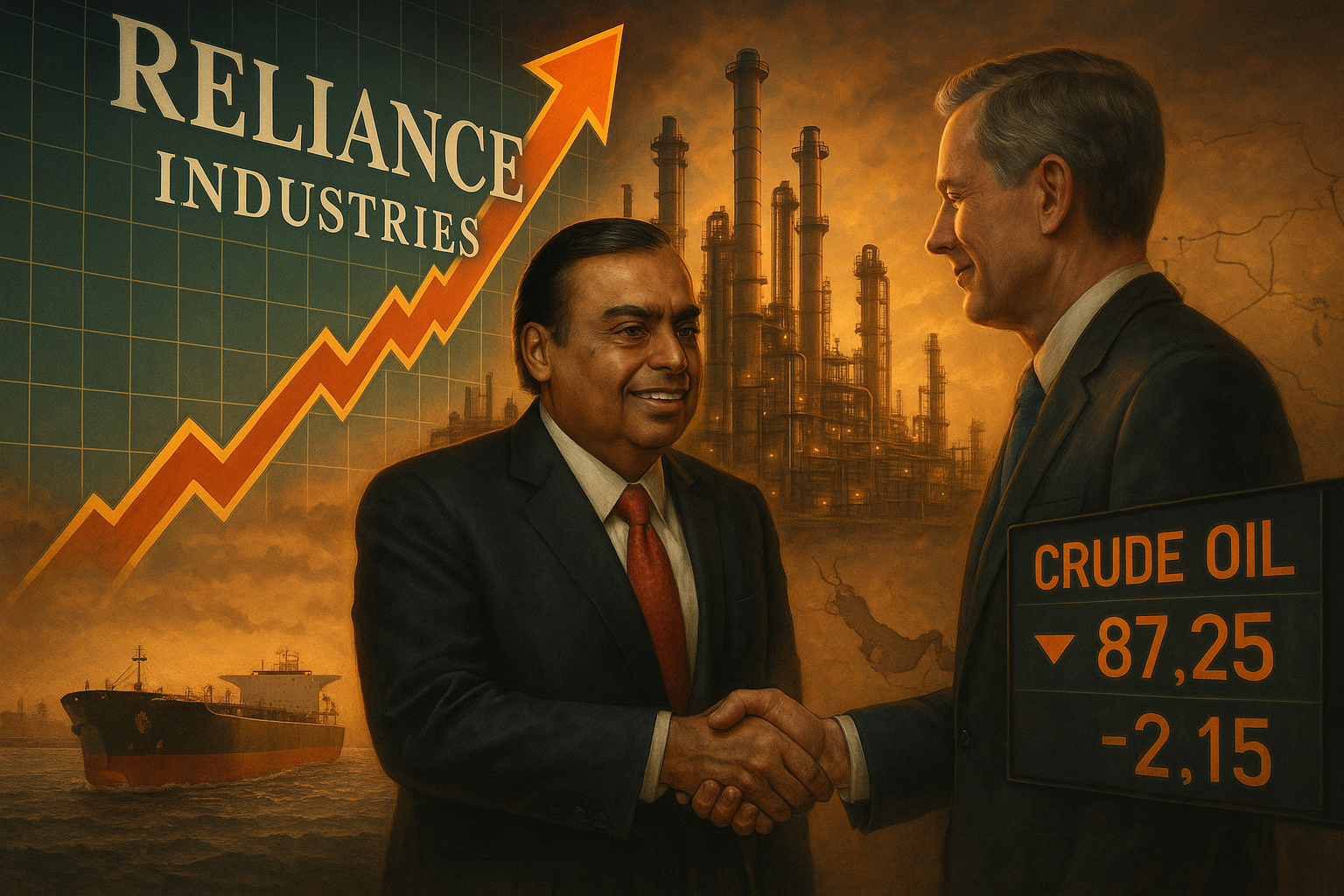
reliance rose sharply in investor conversations during the Iran-Israel war because the market began pricing in two powerful forces at the same time: a geopolitical risk premium in oil and a strategic expansion narrative around Mukesh Ambani’s support for a U.S. refinery deal. When conflict threatens supply routes, raises freight costs, and pushes crude volatility higher, integrated energy companies with large refining and trading capabilities often look better positioned than the broader market. That was the central reason traders and longer-term investors started reassessing Reliance Industries more positively.
The first layer of the rally was tied to energy economics. In periods of Middle East tension, crude prices can spike quickly, but the more important driver for refiners is not just headline oil prices. It is the relationship between crude input costs, product prices, availability of discounted feedstock, export demand, and refining margins. Reliance operates one of the world’s most complex refining systems, which gives it flexibility in sourcing and processing. When uncertainty rises, that complexity can become a competitive advantage, especially if product cracks for diesel, jet fuel, and gasoline improve faster than the cost of crude.
Why reliance rose during oil volatility
Markets tend to reward companies that can absorb shocks better than rivals. Reliance’s scale at Jamnagar, integrated logistics, petrochemicals linkage, and balance sheet strength helped create the view that it could manage crude volatility more effectively than smaller or less diversified players. Investors also understand that integrated groups are not one-dimensional bets. Even if some input costs move unfavorably, trading operations, export opportunities, and product mix optimization can offset part of the pressure. In a war-driven commodity environment, resilience itself becomes a premium factor in valuation.
Another reason for the positive reaction was the possibility of stronger refining margins if global fuel supply remained tight. Any disruption fears around the Strait of Hormuz, sanctions enforcement, shipping insurance costs, or regional refinery operations can widen spreads in refined products. For a company like Reliance, the market often looks beyond the immediate quarter and asks whether earnings quality could improve across several reporting periods. If investors believe margin strength may persist, they tend to assign a higher earnings multiple even before results fully confirm the trend.
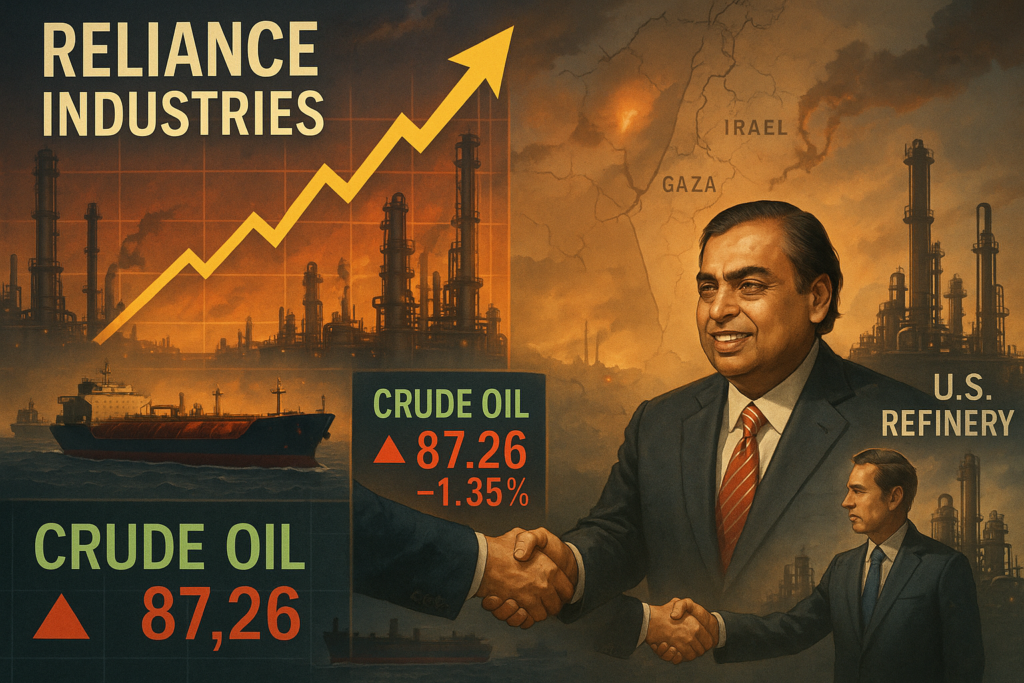
reliance rose and the Ambani U.S. refinery strategy
The second major pillar was strategic positioning. Ambani backing a U.S. refinery deal added a global expansion angle at exactly the moment when energy security became a dominant market theme. A U.S.-linked refining asset can be read in several ways by investors: geographic diversification, proximity to a large fuel market, access to different crude streams, reduced dependence on any one region, and stronger participation in global trade flows. In simple terms, the deal narrative suggested that Reliance was not just reacting to a crisis, but potentially using the crisis period to strengthen its long-term energy footprint.
How the U.S. refinery deal changed sentiment
Sentiment in equity markets is often shaped by story quality as much as by spreadsheets. The U.S. refinery angle gave investors a fresh strategic story that fit the moment. At a time when geopolitical fragmentation is forcing companies to rethink supply chains, ownership or influence across multiple refining geographies appears valuable. That does not mean every overseas deal automatically creates shareholder value. Investors still worry about capital allocation, execution, regulation, and integration risk. But in this case, the market appeared to see the move as a sign of ambition paired with industrial logic rather than diversification for its own sake.
There was also an important signaling effect. When leadership acts decisively during uncertain times, investors often interpret it as confidence in future industry conditions. Ambani’s backing of a refinery transaction suggested that management saw enduring opportunities in fuels, exports, and energy infrastructure despite the global shift toward cleaner energy. For the market, that was significant because it reinforced the idea that conventional energy cash flows may remain robust for longer than some earlier assumptions suggested. Strong cash generation from refining can, in turn, support investments in telecom, retail, and new energy businesses within the wider Reliance ecosystem.
Key drivers investors tracked
- Refining complexity: Ability to process varied crude grades and optimize margins.
- Export exposure: Benefit from stronger regional fuel demand and price dislocations.
- Integrated model: Refining, petrochemicals, logistics, and trading create flexibility.
- Global diversification: A U.S. refinery link can reduce concentration risk.
- Management signaling: Expansion during uncertainty can improve confidence.
Risks behind the rally
Even so, the rise was not risk-free. If crude prices climb too far too fast, refiners can face inventory swings, working capital pressure, and demand destruction. Governments may also intervene through export controls, windfall taxes, or pricing measures if fuel inflation becomes politically sensitive. A U.S. refinery deal could carry environmental compliance costs, labor issues, or lower-than-expected returns if acquired at a rich valuation. That is why the stock move should be seen as a rerating based on expected earnings resilience and strategy, not as proof that every scenario will stay favorable.
The broader lesson is that markets reward businesses that turn volatility into optionality. Reliance was viewed as a company that could benefit from conflict-driven energy repricing while simultaneously expanding its strategic reach. The Iran-Israel war created a backdrop in which refinery economics, supply security, and asset geography mattered more than usual. Because Reliance already had scale and complexity, and because Ambani’s U.S. refinery move added a forward-looking growth narrative, investors found enough reasons to bid the stock higher. That is the clearest explanation for why Reliance rose: the company came to represent both near-term defensive strength and long-term energy opportunity in one trade.
Conclusion
For investors, the rally was less about a simple war premium and more about a combination of improved margin expectations, operational flexibility, and strategic expansion. If conflict risk had eased quickly, some gains could have moderated. But if energy markets stayed tight and the U.S. refinery thesis looked credible, the positive case for Reliance remained stronger than for many peers. In that sense, the stock’s move reflected how global investors increasingly evaluate energy companies: not only by current earnings, but by who can best navigate a fragmented, security-focused commodity world.
Leave a Reply