
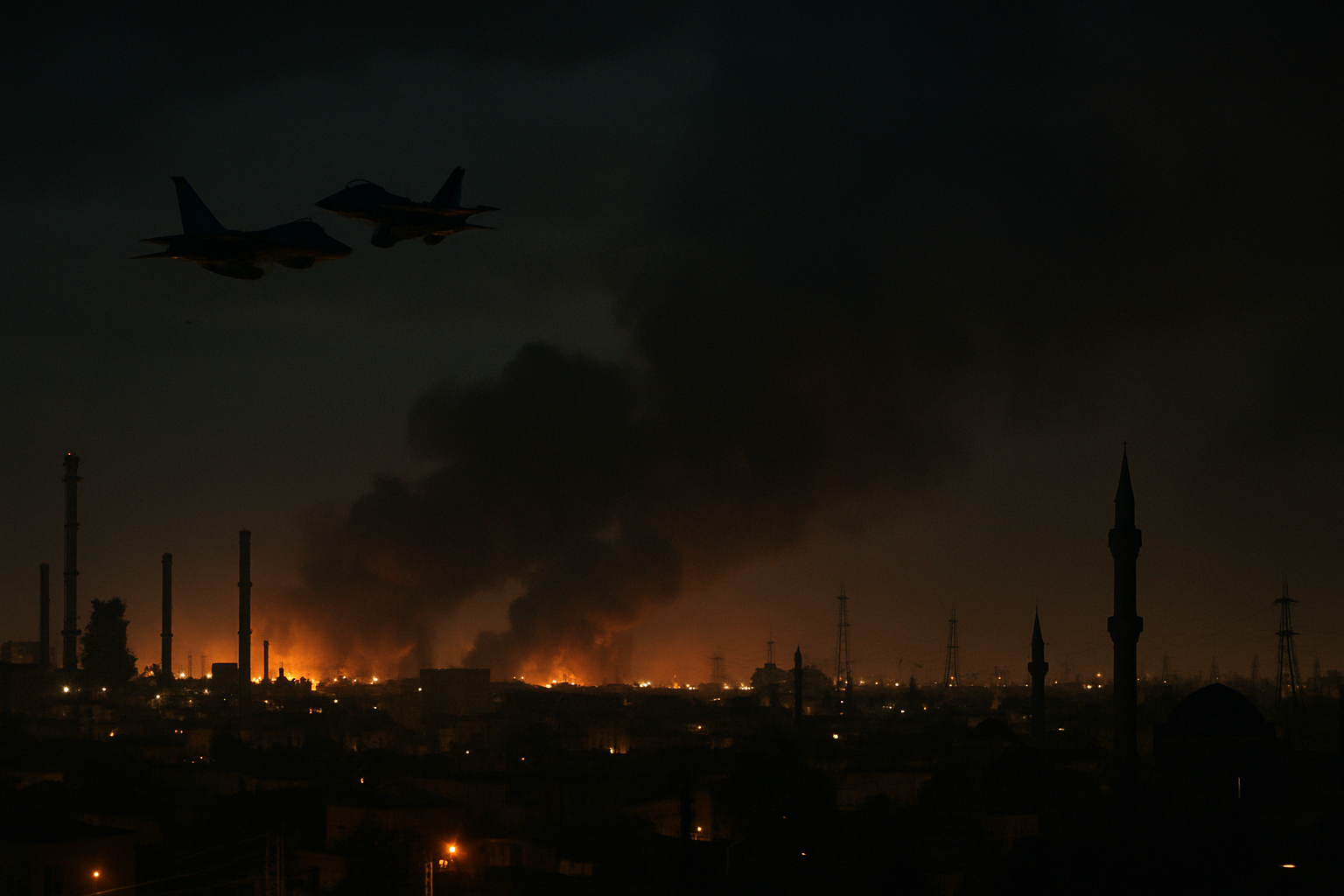
President Donald Trump’s decision to reject a deal for now, while the United States and Israel intensify strikes linked to Isfahan, signals a familiar but still consequential approach: maximize pressure first, leave diplomacy ambiguous, and force adversaries and allies alike to guess where the ceiling really is. The immediate headline is military, but the deeper story is political. A refusal to endorse an agreement in the middle of a sharper military phase suggests that Washington wants leverage before language, and that it believes the threat of more action may produce a better bargaining position later. Whether that judgment proves effective depends less on tactical success than on how Iran, Israel, Gulf states, and domestic audiences interpret the message.
Isfahan matters because it carries strategic, symbolic, and psychological weight. Any operation associated with that area is read not only as an attempt to disrupt capabilities, but also as a demonstration that highly sensitive nodes are vulnerable. That changes the diplomatic environment. It narrows the space for quiet compromise in the short term, even as it can increase incentives for eventual talks if pressure becomes too costly to absorb. The paradox is central to the current moment: strikes can be used to avoid a wider war by reinforcing deterrence, yet they can also make escalation harder to contain if each side feels compelled to answer visibly.

analysis trump rejects deal: what the signal means
Trump’s rejection of a deal for now is important because the phrase leaves room for movement without offering reassurance. It tells supporters that he is not conceding under pressure, tells partners that military force remains on the table, and tells Tehran that any path to negotiation would begin from a position of heightened coercion. In practical terms, this is less a definitive no than a sequencing choice. The administration appears to be saying that talks, if they come, should follow a display of power rather than precede it. For advocates of hardline bargaining, that can look disciplined. For critics, it risks creating a cycle in which military action keeps expanding the list of grievances that diplomacy must later solve.
analysis trump rejects deal and the pressure strategy
The logic behind the pressure strategy is straightforward. If decision-makers believe prior diplomacy bought time without changing core behavior, they may conclude that only credible force can restore deterrence. Under that view, rejecting a deal now prevents the appearance of weakness and preserves negotiating leverage. But there is an equally strong counterargument. Coercive leverage works best when paired with a clear off-ramp. If the target cannot identify what restraint would earn in return, it may choose retaliation, delay, or symbolic defiance over compromise. Strategic ambiguity can be useful, but too much ambiguity invites miscalculation. The key question is whether Washington and Jerusalem are shaping choices for Iran or simply shrinking everyone’s room to maneuver.
Why Isfahan changes the diplomatic equation
Strikes associated with Isfahan are not perceived as routine battlefield actions. They are interpreted as messages about reach, intelligence penetration, and willingness to hit sensitive infrastructure. That gives them outsized diplomatic impact. Allies may welcome the show of resolve, but they also have to prepare for the consequences: disrupted shipping, proxy responses, cyber activity, or a prolonged crisis atmosphere that affects energy markets and regional politics. For mediators, the challenge becomes harder because each new strike can raise the minimum political price of compromise. Leaders who might privately prefer de-escalation can find themselves publicly boxed in by nationalist expectations and by the need to project resolve.
Israel’s role further sharpens the picture. Jerusalem has long argued that delaying hostile capabilities is not enough unless the delay is meaningful and repeatedly enforceable. From that perspective, a tougher operational tempo is not merely punitive; it is preventative. The United States, however, balances additional considerations, including alliance management, global force posture, and domestic political narratives about strength versus restraint. Trump’s posture seems designed to align with Israel’s urgency without fully surrendering American flexibility. That balance is difficult to sustain. If strikes continue, Washington will increasingly own the consequences, whether or not it formally frames itself as the lead actor.
Risks of escalation and the limits of deterrence
Deterrence is often discussed as though it were a stable condition, but in crises it is better understood as a contest of interpretation. One side intends to signal limits; the other may read the same action as preparation for a broader campaign. That is why the present approach carries real hazards. Iran and its partners could choose direct or indirect responses calibrated to show resilience without inviting overwhelming retaliation. Yet even calibrated responses can spiral if they hit politically sensitive targets or cause casualties that demand reply. The more public and visible the exchange becomes, the harder it is for any side to step back without appearing to yield. A strategy built on pressure therefore needs exceptionally clear internal discipline, realistic objectives, and communication channels that survive the rhetoric.
analysis trump rejects deal in domestic political context
There is also a domestic dimension that should not be overlooked. Trump’s political brand has long mixed skepticism of prolonged wars with a preference for unmistakable displays of strength. Rejecting a deal while backing intensified strikes fits that pattern: it avoids the appearance of accommodation while preserving the claim that force can produce better terms. Supporters may see that as bargaining from strength. Opponents may argue it risks another open-ended confrontation disguised as leverage. In either case, the politics matter because they influence how long the administration can sustain a high-pressure posture and what kinds of diplomatic concessions it could later defend at home. Any eventual negotiation would have to be sold not as compromise for its own sake, but as proof that coercion worked.
The most plausible near-term outcome is neither immediate war nor immediate agreement, but a tense interval in which military signaling and diplomatic testing happen in parallel. Publicly, positions may harden. Privately, intermediaries may probe for conditions under which strikes pause, retaliation stays limited, and talks become possible without obvious humiliation for either side. That would be consistent with many past crises, where harsh rhetoric masked exploratory contacts. Still, the window for such diplomacy narrows when operational tempo increases. If leaders begin to believe that credibility itself is at stake, they may prioritize visible action over strategic patience.
What to watch next
- Operational scope: whether strikes remain limited and targeted or broaden in a way that suggests a larger campaign.
- Iranian response: whether retaliation is direct, deniable, cyber-based, or routed through regional partners.
- US messaging: whether officials define a clear off-ramp or continue to rely on deliberate ambiguity.
- Israeli objectives: whether actions are framed as temporary disruption or part of a sustained effort.
- Diplomatic traffic: signs of mediation through regional states or other intermediaries despite public hardening.
The central analytical point is simple: rejecting a deal now is not the end of diplomacy, but an attempt to reorder it around coercion. That can succeed if pressure is tightly matched to realistic aims and paired with a believable path to de-escalation. It can fail if military gains create political expectations that no negotiation can satisfy. Isfahan raises the stakes because it compresses time, symbolism, and strategic risk into a single theater. For now, Trump’s choice suggests he believes force improves the negotiating landscape. The coming test is whether that landscape becomes more navigable or more combustible.
Leave a Reply