
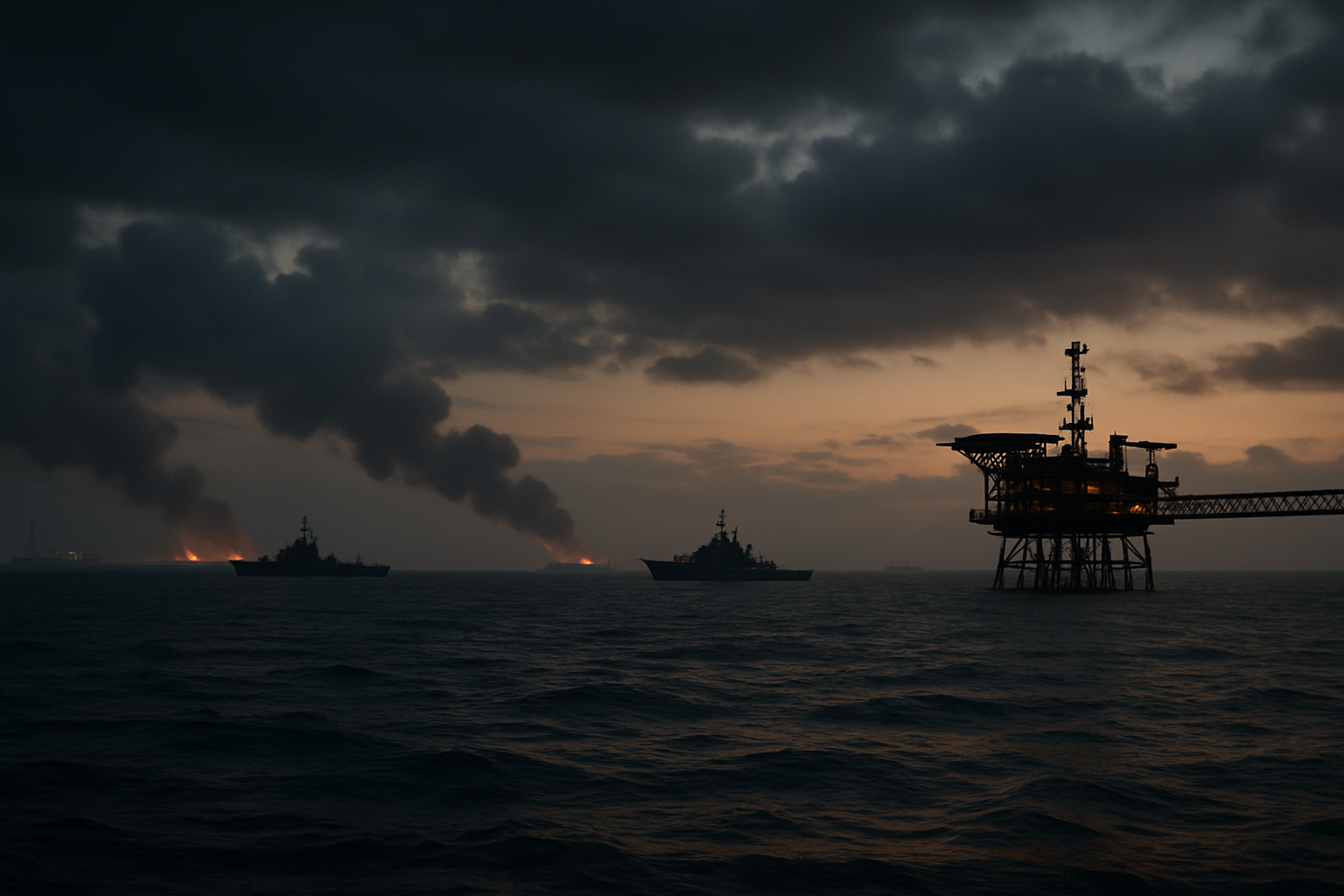
The latest turn in regional tensions points to a wider and more dangerous phase of confrontation. Reports and political statements tied to Iranian pressure on Gulf states, combined with Donald Trump’s claim that Kharg Island was “decimated,” have intensified debate over what comes next. The key issue is not only whether every battlefield claim is accurate, but how such claims shape calculations in Tehran, Gulf capitals, Washington, and global energy markets. In moments like this, rhetoric can become part of the conflict itself, influencing deterrence, signaling resolve, and raising the risk of misreading the other side.
analysis middle east crisis: why this moment matters
What makes this episode especially serious is the overlap of military, political, and economic pressure. Iran’s posture toward Gulf states suggests an effort to warn neighbors against deeper alignment with any campaign that threatens Iranian interests. At the same time, public assertions about damage to Kharg Island carry symbolic and strategic weight because the island is closely associated with Iran’s oil export infrastructure. Even when details remain contested, the message is clear: the confrontation is no longer being framed as a contained exchange, but as a struggle that could spread across the wider Gulf.
analysis middle east crisis and the signal to Gulf states
Iran’s targeting language toward Gulf states should be understood primarily as coercive signaling. Tehran has long tried to convince nearby governments that hosting military assets, sharing intelligence, or offering logistical support to its adversaries could bring direct consequences. This does not automatically mean every threat becomes action, but it does mean Gulf leaders must weigh their partnerships against the danger of becoming a frontline theater. For smaller states in particular, the challenge is to preserve security ties with powerful allies while avoiding steps that make them appear to be active participants in escalation.
Kharg Island and the politics of strategic messaging
Trump’s statement that Kharg Island was “decimated” is significant regardless of whether independent confirmation matches the wording. In crisis environments, leaders often use forceful language to project dominance, reassure supporters, or unsettle opponents. But such language can also narrow diplomatic space. If one side publicly describes a strategic asset as devastated, the other side may feel pressure to respond strongly simply to avoid the appearance of weakness. That dynamic matters because Kharg Island is not merely a physical site; it represents vulnerability in the energy domain and therefore a potential trigger for broader market anxiety.
For analysts, the central question is less about dramatic phrasing and more about strategic intent. Is the goal to deter future Iranian action by highlighting exposure, or to prepare audiences for a longer confrontation in which energy infrastructure becomes a legitimate pressure point? Either interpretation has consequences. If deterrence fails, attacks or claimed attacks on export nodes can encourage retaliation against shipping routes, offshore facilities, or regional partners seen as enabling hostile operations. That is why even uncertain battlefield narratives can have real geopolitical effects well before facts are fully established.
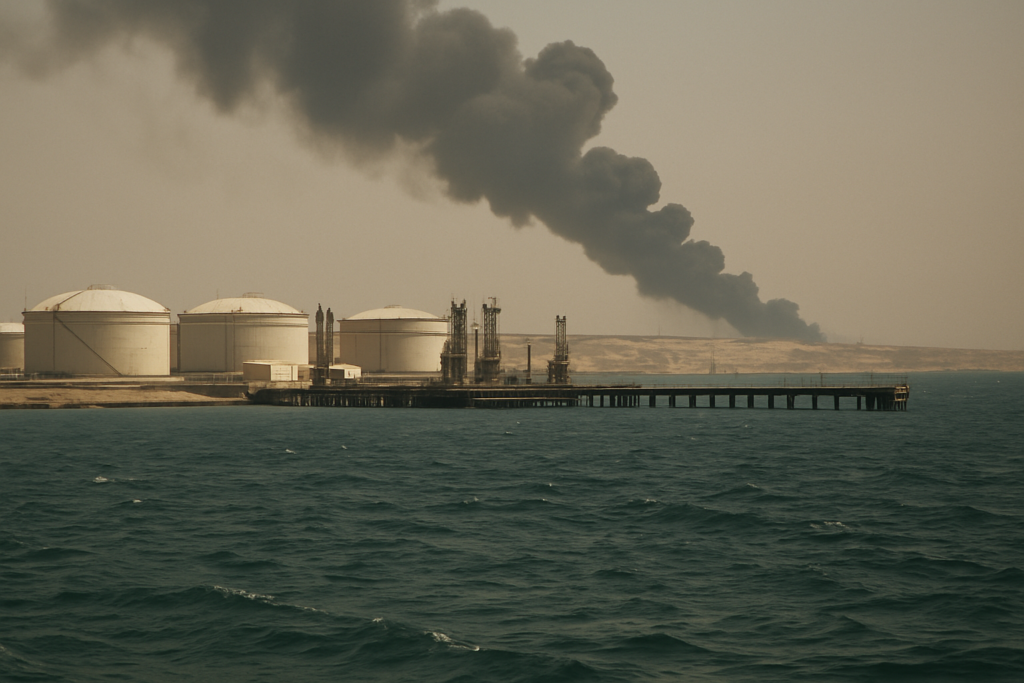
Energy markets, shipping lanes, and regional vulnerability
The Gulf remains one of the world’s most sensitive energy corridors, so any threat involving Iranian export infrastructure or Gulf state security quickly exceeds the regional frame. Markets react not only to confirmed disruptions but also to rising probabilities of future interference with shipping and production. Insurance costs, naval postures, and commercial routing decisions can all shift on the basis of perceived risk. This means the widening crisis has a built-in economic amplifier: even limited military action or aggressive signaling can create consequences far beyond the immediate exchange by increasing uncertainty around supply reliability.
What Gulf governments are likely calculating
Most Gulf governments will now be trying to balance three priorities at once:
- maintaining deterrence and national defense without inviting direct strikes,
- protecting energy infrastructure and maritime traffic,
- keeping diplomatic channels open in case de-escalation becomes possible.
That balancing act is difficult because each move can be interpreted in opposite ways. A stronger security posture may discourage attack, yet it may also be viewed by Tehran as proof of hostile alignment. Public restraint may reduce immediate friction, yet it can also be read as uncertainty. As a result, Gulf capitals are likely to favor practical defense coordination while using careful language designed to avoid locking themselves into a publicly irreversible position.
How Washington may frame the next phase
In Washington, the political incentive is often to present events as evidence of either successful pressure or necessary resolve. But a widening confrontation creates tradeoffs for any US administration or political figure. Strong declarations can reinforce deterrence, yet they also increase expectations that the United States will act decisively if threats spread to partners or maritime routes. If the public narrative escalates faster than actual policy planning, the gap can produce confusion among allies and adversaries alike. That is one reason claims about strategic damage should be treated with caution until they are independently assessed and placed in a broader operational context.
The most plausible near-term outlook is not a full regional war as an inevitable outcome, but a more unstable environment marked by signaling, limited strikes, cyber pressure, maritime alerts, and heightened risk of accidental escalation. In that setting, the danger comes from cumulative friction rather than a single headline event. A statement about Kharg Island, a warning to Gulf states, a naval deployment, or an intercepted strike can each be manageable on their own. Together, however, they can create a chain of action and reaction that becomes harder for leaders to control. That is why the current analysis middle east crisis story should be read as a warning about strategic spillover: once more actors feel exposed, crisis management becomes much more fragile.
Leave a Reply