
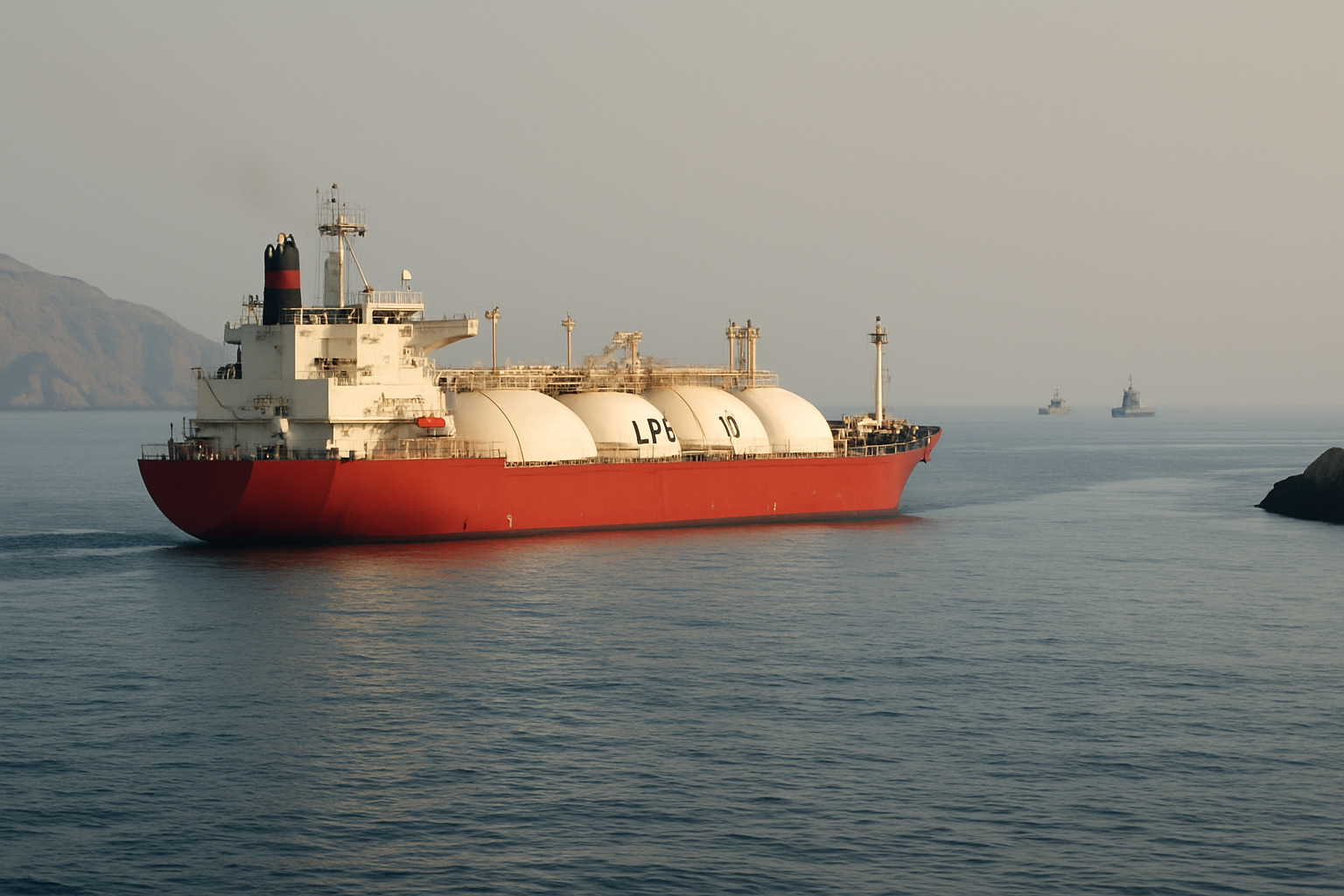
The passage of two Indian vessels carrying liquefied petroleum gas through the Strait of Hormuz is significant not because it proves normality, but because it shows how global energy trade keeps moving even when geopolitical risk remains elevated. The waterway is one of the world’s most closely watched maritime chokepoints, and any tanker movement through it becomes a practical test of confidence among shipowners, charterers, insurers and buyers. For India, which depends on imported energy across several fuel categories, every safe transit through the strait matters far beyond a single voyage.
Why two indian vessels carrying LPG matters
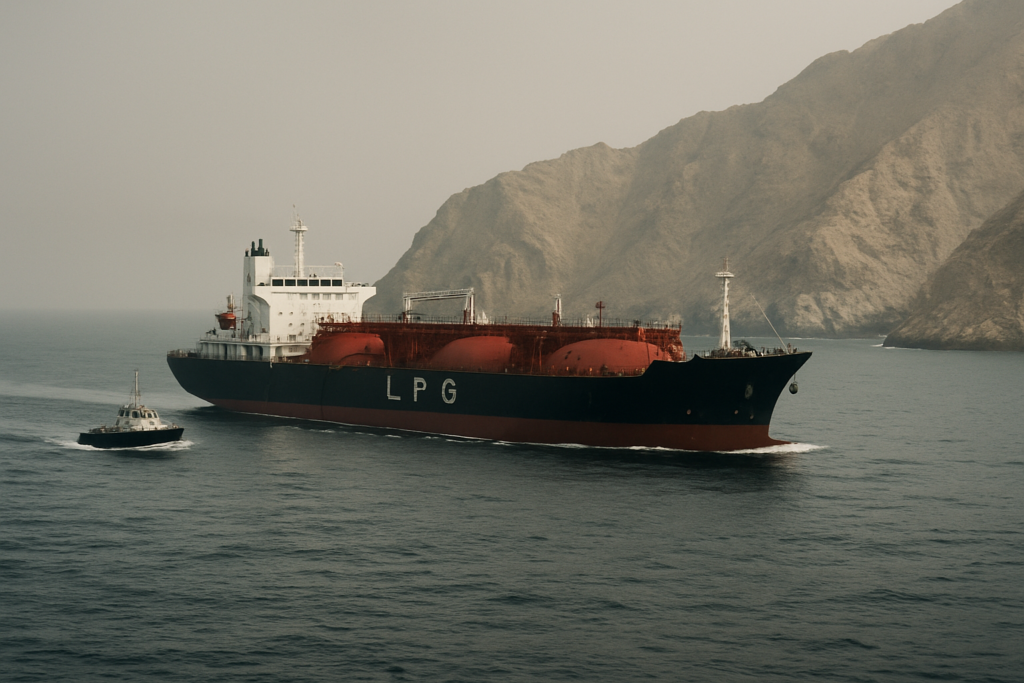
LPG is a commercially essential fuel for households, industry and petrochemical use, so supply continuity has direct economic and social importance. When two Indian vessels carrying LPG cross Hormuz, the event offers a real-world signal about whether cargoes can still be lifted, insured and delivered despite regional tension. It does not eliminate risk, and it should not be read as a guarantee that all future sailings will be equally smooth. Still, such transits suggest that trade channels remain open enough for market participants to keep operating while closely managing exposure.
The Strait of Hormuz as a strategic pressure point
The Strait of Hormuz connects Gulf producers to buyers across Asia and beyond, making it vital for crude oil, refined products and LPG. Its importance lies not only in volumes, but also in limited substitution in the short term: rerouting is often costly, slower or simply unavailable for certain cargo chains. That is why even a modest rise in perceived danger can affect freight rates, war risk premiums, scheduling decisions and inventory planning. In this setting, vessel movements become more than logistics; they become indicators of how resilient the regional trade system really is.
Risk signals behind two indian vessels carrying cargo
From an analytical perspective, the safe crossing of two Indian vessels carrying LPG points to several underlying judgments. Operators appear to believe that the route remains navigable with heightened precautions. Insurers, while cautious, seem willing to support voyages under revised risk assumptions. Importers and traders may also prefer continued movement over waiting onshore, because delays can disrupt downstream demand and create fresh price uncertainty. Yet none of this means risk has faded. It means the shipping ecosystem is balancing danger against the high cost of interruption.
What this suggests for India’s energy security
India’s energy security strategy relies not just on buying fuel, but on ensuring that shipping, ports, contracting and inventories can absorb disruption. In that context, successful LPG transit through Hormuz reinforces the value of diversification and operational flexibility. Policymakers and companies alike tend to monitor vessel routing, cargo timing, insurance conditions and stock positions together rather than in isolation. A single passage cannot define the broader picture, but it can support the view that India’s supply chains are capable of functioning under stress when commercial coordination is strong.
Shipping, insurance and operational caution
Maritime trade through sensitive regions is shaped by risk management as much as by demand. Shipowners may adjust speed, routing windows, onboard procedures and communications protocols. Charterers may seek tighter voyage terms, while insurers reassess exposure based on the latest security environment. Port schedules can also become more delicate when uncertainty rises, because a delayed loading or discharge cascades across later voyages. The movement of these LPG carriers therefore highlights the often unseen framework that keeps energy trade moving: contracts, surveillance, marine underwriting and disciplined ship operations.
Market implications beyond a single voyage
Financial and commodity markets often react to headlines about conflict faster than physical flows do. That is why an actual tanker crossing can carry analytical weight. It suggests that the physical market may be showing more resilience than the most anxious scenarios imply. However, traders will still watch for signs such as longer turnaround times, reduced appetite from some shipowners or abrupt changes in insurance costs. If those pressures build, delivered fuel prices can rise even without a formal closure of the route. In other words, continuity and stress can coexist.
How buyers and traders may read the crossing
For buyers, the transit of two Indian LPG vessels may be seen as reassurance, but only of a limited kind. It indicates that procurement from Gulf-linked routes remains feasible, not that procurement is free of complication. Sensible market participants are likely to continue hedging timing risk, maintaining flexible sourcing options where possible and watching official advisories closely. Traders may also treat the crossing as evidence that panic is premature. Still, they are unlikely to ignore how quickly sentiment can shift in a region where political events can alter shipping conditions with very little warning.
What to watch next
The key question now is whether such crossings remain routine or become exceptional. Analysts will look for consistency in vessel traffic, the tone of insurer guidance, the willingness of shipowners to accept new voyages and any change in regional naval or security postures. They will also assess whether buyers begin to rebuild precautionary inventories or seek alternative sourcing patterns. The broader lesson is clear: the movement of two Indian vessels carrying LPG is important because it reveals the current operating balance between risk and necessity. As long as energy demand remains firm, trade will try to flow, but every transit through Hormuz will continue to be read as a measure of confidence under pressure.
- Key takeaway: the crossing signals continued trade functionality, not the disappearance of regional risk.
- For India: LPG logistics remain tightly linked to maritime security and import resilience.
- For markets: physical movements can steady sentiment, but insurance and freight conditions still matter.
- For analysts: repeatability of safe passages is more meaningful than any single voyage.
Leave a Reply