
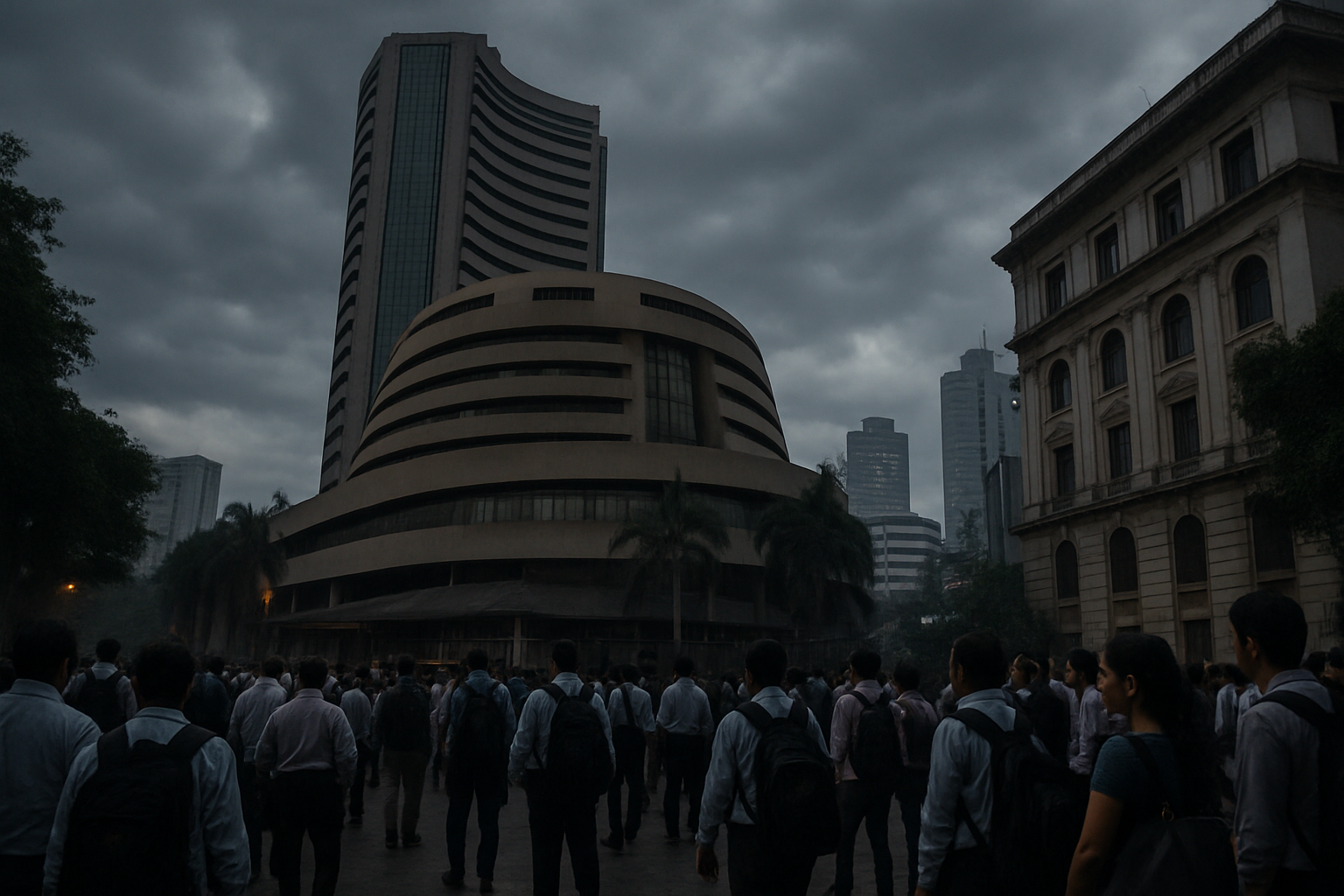
Indian investors are likely to begin the week with global tension in focus after the latest developments involving Israel and Iran. When geopolitical risk rises suddenly, markets usually react first through emotion and asset repricing rather than through perfect analysis. For Indian equities, the immediate questions for Monday are simple: will crude oil stay elevated, will the rupee face pressure, and will traders cut risk in cyclical sectors before clearer signals emerge from global markets?
The direct economic linkage between India and the conflict zone is limited compared with the market effect that moves through energy prices, risk sentiment, and foreign fund flows. India imports a large share of its crude needs, so any sustained jump in oil can feed concerns about inflation, corporate margins, and the current account. That is why traders often watch Brent crude, the US dollar, bond yields, and Asian market reaction before taking early positions in domestic stocks.

indian markets moday israel: why Monday could open cautious
A cautious or gap-down opening is possible if global markets treat the conflict as a risk-off event. In such phases, investors typically move toward perceived safety, while equities, especially emerging markets, can face selling pressure. That does not automatically mean a deep correction, because market direction often depends on whether the conflict appears contained or likely to widen. If international cues remain orderly and oil does not spike sharply, Indian benchmarks may stabilize after an initial nervous move.
Volatility may be more visible than broad panic. Index-heavy defensive names sometimes attract buying when uncertainty rises, while leveraged and sentiment-driven pockets can weaken faster. Traders should also remember that Monday price action can exaggerate headlines. Early moves are often influenced by overnight futures, stop-loss activity, and rapid repositioning by short-term participants rather than a settled view on long-term fundamentals.
indian markets moday israel: crude oil, rupee, and inflation watch
Crude oil is likely to be the most important transmission channel for Indian markets. If oil remains elevated for several sessions, airlines, paint makers, chemical users, logistics firms, and other fuel-sensitive businesses may face pressure in market perception. A higher oil environment can also revive concern about imported inflation, which matters for interest-rate expectations and consumer purchasing power. For that reason, the market may respond not just to the conflict itself, but to whether energy supply routes seem at risk.
The rupee is another key signal. During periods of global stress, the US dollar and other defensive assets often strengthen, while emerging-market currencies can weaken. A softer rupee may increase cost pressure for import-dependent sectors, even if export-oriented businesses receive some support. Investors should therefore read Monday’s market through a linked framework: oil prices, currency stability, and foreign institutional sentiment often tell a more useful story than headlines alone.
Sectors that may stay resilient
Defensive sectors such as pharmaceuticals, select information technology names, and consumer staples may appear relatively resilient if broader risk appetite fades. Large companies with steady cash flows, lower input uncertainty, and stronger balance sheets often become temporary shelters during geopolitical stress. Gold-related themes and safe-haven sentiment may also remain in focus, though investors should avoid chasing sharp moves after the first reaction.
Sectors that may face near-term pressure
Oil-sensitive and economically cyclical spaces may remain under scrutiny. Aviation, auto segments dependent on input costs, paints, and industries with energy-intensive operations can see sentiment weaken if crude stays firm. Financials may not be directly hit by the conflict, but they can still move with the broader market because they occupy a large weight in the major indices. Midcaps and smallcaps may also show larger swings than frontline stocks if risk aversion expands.
What investors should do instead of reacting emotionally
For long-term investors, Monday should be approached with discipline rather than prediction. A geopolitical headline-driven fall is not always the same as a structural bear phase. Investors may benefit from reviewing portfolio exposure to high oil sensitivity, avoiding impulsive exits in quality companies, and keeping some liquidity for staggered buying if volatility creates better valuations. Traders, on the other hand, may need tighter risk controls because sudden reversals are common when markets digest war-related news.
- Track crude oil and global index futures before the opening bell.
- Watch rupee movement for clues on foreign flow pressure.
- Prefer position sizing over aggressive directional bets.
- Focus on quality and balance-sheet strength in uncertain conditions.
- Separate short-term headline volatility from long-term business value.
Bottom line for Monday’s Indian market outlook
The Israel-Iran conflict introduces uncertainty, and uncertainty usually raises volatility before it changes the economic picture. For Indian markets on Monday, the biggest variables are likely to be the behavior of crude oil, the tone of global risk assets, and whether the situation appears contained or escalating. A nervous open is possible, but the durability of any sell-off will depend less on fear itself and more on how energy, currency, and cross-border capital flows respond over the next few sessions.
Leave a Reply